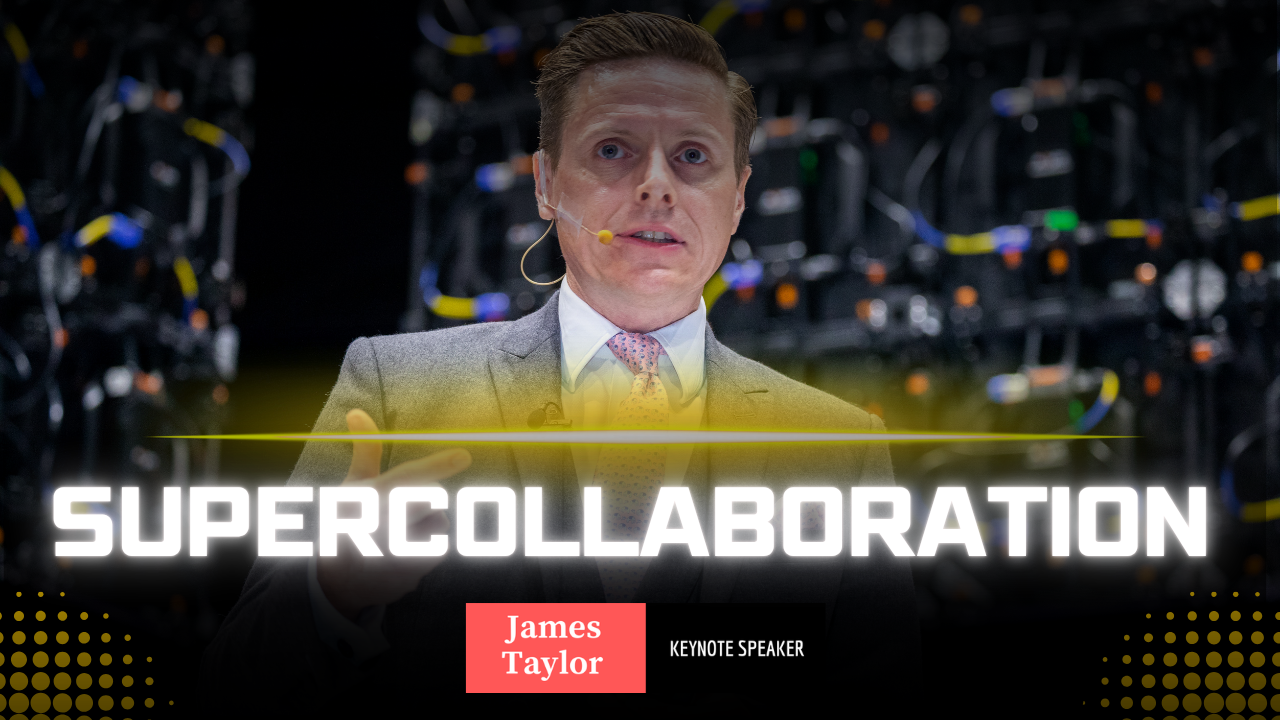
SuperCollaboration™
How humans and AI work together without the human half of the partnership quietly losing its edge.
Explore the keynote →
Recorded at the Gaylord Pacific ahead of closing a technology and defense conference of around 1,000 attendees, James Taylor unpacks the research behind cognitive atrophy — the decline in critical thinking that shows up as organisations deploy AI at scale — and what leaders need to do to stop it.
SuperCollaboration — recorded in San Diego, California. Runtime 2:36.
Approximate — single continuous take, no chapter markers in the source recording.
There is a question senior leaders keep raising in private that rarely makes it onto the conference agenda: what happens to our people's thinking once the AI is doing the thinking?
That question has a name — cognitive atrophy — and it was the subject of this SuperCollaboration episode, recorded in San Diego ahead of a closing keynote for a technology and defense conference of around 1,000 attendees. It is not a fringe worry. It is the concern that comes up, again and again, once an organisation moves past the pilot phase and starts deploying AI at genuine scale.
Cognitive atrophy describes a decline in critical thinking skills tied to over-reliance on the tools. Not a decline in output — output usually goes up. A decline in the underlying capability: the judgement, the recall, the ability to hold a problem in your head and work it through.
The reason senior leaders are raising it now, rather than three years ago, is scale. A handful of people using an LLM to speed up a first draft is one thing. An entire function defaulting to it for every piece of analysis is another. And the thing about atrophy is that it is invisible while it happens. Nobody files a ticket saying their critical thinking has degraded.
The research James walks through in the episode comes from MIT. The design is simple enough to explain in a sentence: three groups were given the same essay-writing task, with EEG caps on to measure brain activity. One group wrote using an LLM. One group used search engines. One group used nothing but their own thinking.
The results did not favour the assisted groups.
"The group that wasn't using an LLM, wasn't using search engines, were just kind of using their own mind... that had the highest level of activity going on in the brain."
— James Taylor, SuperCollaboration, San DiegoThe brain activity finding is striking on its own. The second finding is the one that should give any leader pause, because it goes to whether the work is being learned at all, not just whether it is being produced.
"The people that wrote using ChatGPT and LLM, they couldn't even remember what they wrote. Think about that."
— James Taylor, SuperCollaboration, San DiegoThink about what that means inside an organisation. A strategy document gets drafted. It gets circulated, approved, filed. And the person whose name is on it cannot tell you, minutes later, what it actually said. That is not a productivity trade-off you can put on a slide and defend. It is a retention failure — and retention is the thing that compounds into expertise.
If this pattern feels speculative, it shouldn't. James draws the parallel to robotic surgery, where over-reliance on the machine has been shown to erode surgeons' own skills over time. Same mechanism, higher stakes, and a field that has already had to reckon with it.
That parallel is useful in a boardroom because it moves the conversation off "is AI good or bad" — a conversation nobody wins — and onto a narrower, more answerable question: which capabilities does this organisation need to keep sharp in its people, regardless of what the tool can do?
Here is the part that matters most, and it is the part that gets lost when this research circulates as a headline: none of it is an argument for avoiding AI.
"With AI, it doesn't have to be this way."
— James Taylor, SuperCollaboration, San DiegoThe argument is for deliberateness. Organisations that scale AI without a strategy for protecting critical thinking and decision-making will get the productivity gain and the atrophy together, as a package. Organisations that design for both can take the gain and keep the capability. The difference is not the technology. It is whether anyone at the top decided it mattered.
That is the work: naming which decisions stay human, building the habits that keep judgement in play, and making it explicit rather than leaving it to whatever each team drifts into. It is also, not incidentally, what separates the companies that will still have deep expertise in five years from the ones that quietly traded it away for speed.
If you're an event organiser with an AI-related theme, this is the material James brings to the stage — the research, the parallels from other fields, and the practical strategies leaders can act on when they get back to the office. He delivers it as an opening or closing keynote for conferences, leadership summits and corporate events, in San Diego and worldwide.
You can explore the SuperCollaboration keynote, see the full range of AI keynote topics, or read the previous episode in this series, recorded in Istanbul.
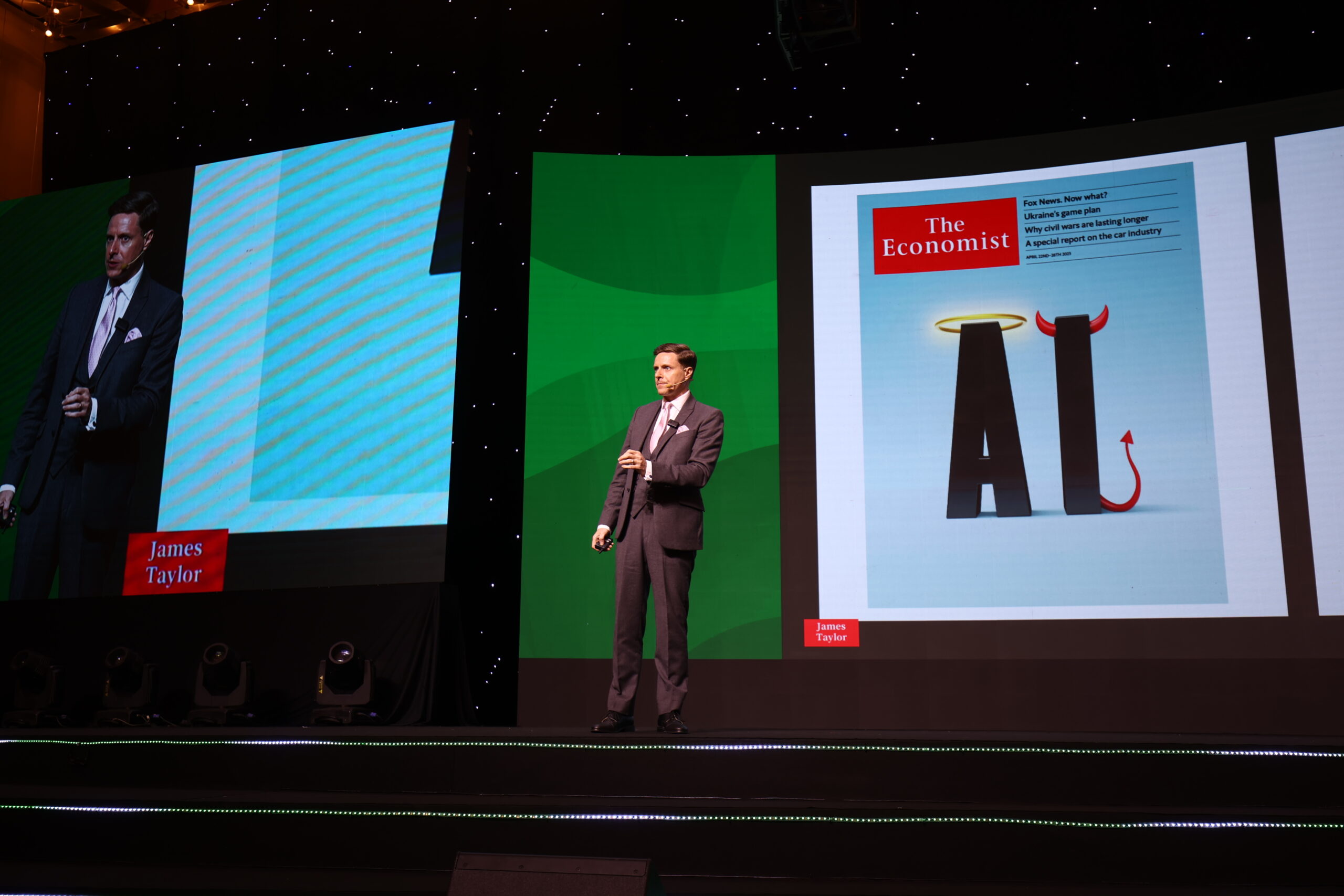
How humans and AI work together without the human half of the partnership quietly losing its edge.
Explore the keynote →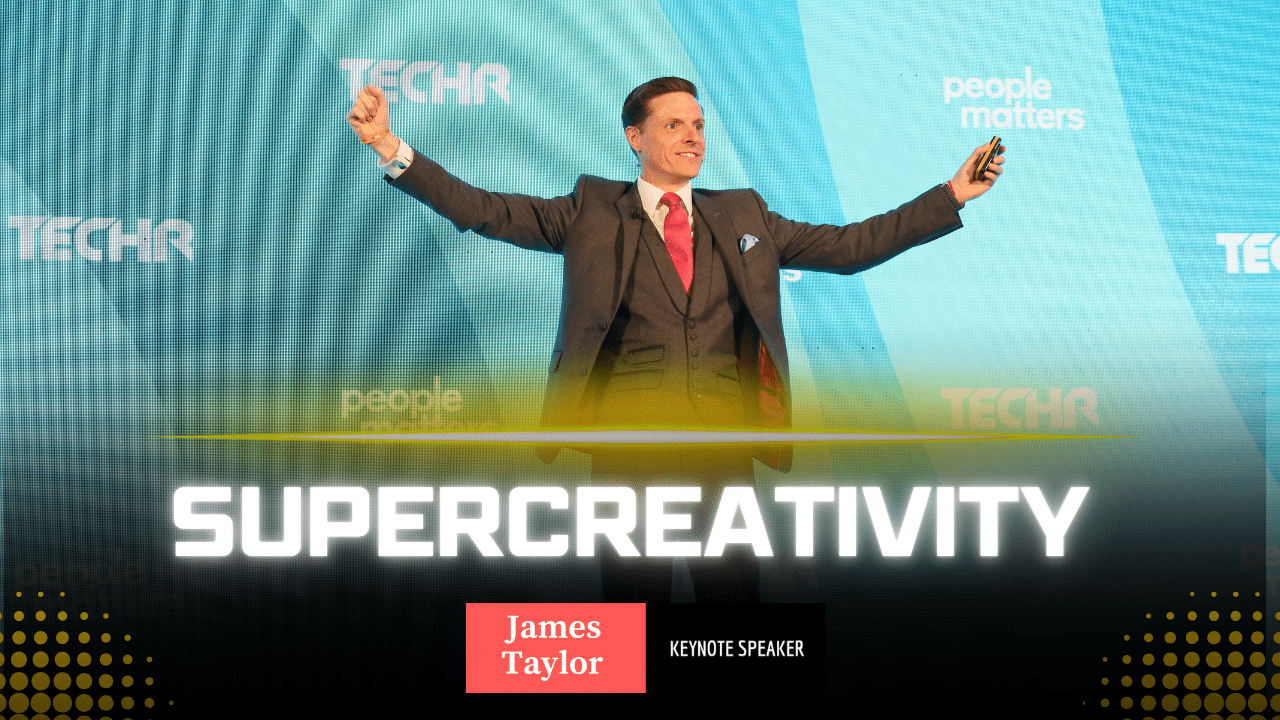
Augmenting human creativity in the age of artificial intelligence — the thinking that AI cannot do for you.
Explore the keynote →
A keynote built around your conference theme, your audience and the decisions in front of them.
Discuss a custom keynote →Cognitive atrophy is a decline in critical thinking skills tied to over-reliance on AI tools. It is the specific risk senior leaders are raising as their organisations deploy AI at scale — output rises, but the underlying human capability erodes.
MIT researchers put EEG caps on three groups given the same essay-writing task: one using an LLM, one using search engines, and one using only their own thinking. The unaided group showed the highest level of brain activity of the three.
Participants who wrote their essays using an LLM could not recall what they had written moments after finishing. James Taylor describes this as a retention failure rather than a simple productivity trade-off — the work was produced, but it was not learned.
No. As James puts it, with AI it doesn't have to be this way. The point is that leaders need deliberate strategies to protect critical thinking and decision-making while scaling AI use, rather than assuming the capability will look after itself.
Yes. James delivers opening and closing keynotes on artificial intelligence, creativity and innovation for conferences and corporate events in San Diego and worldwide. He has delivered over 3,000 events across more than 50 countries.
Use the enquiry form on this page, email enquiries@jamestaylor.me, or message the team on WhatsApp at +971 50 474 1875 with your event dates, location and audience.
Tell us about your conference theme, your audience and your dates. You'll hear back from the team with availability and a proposed approach.
Complete the form and the team will come back to you with dates and fees.