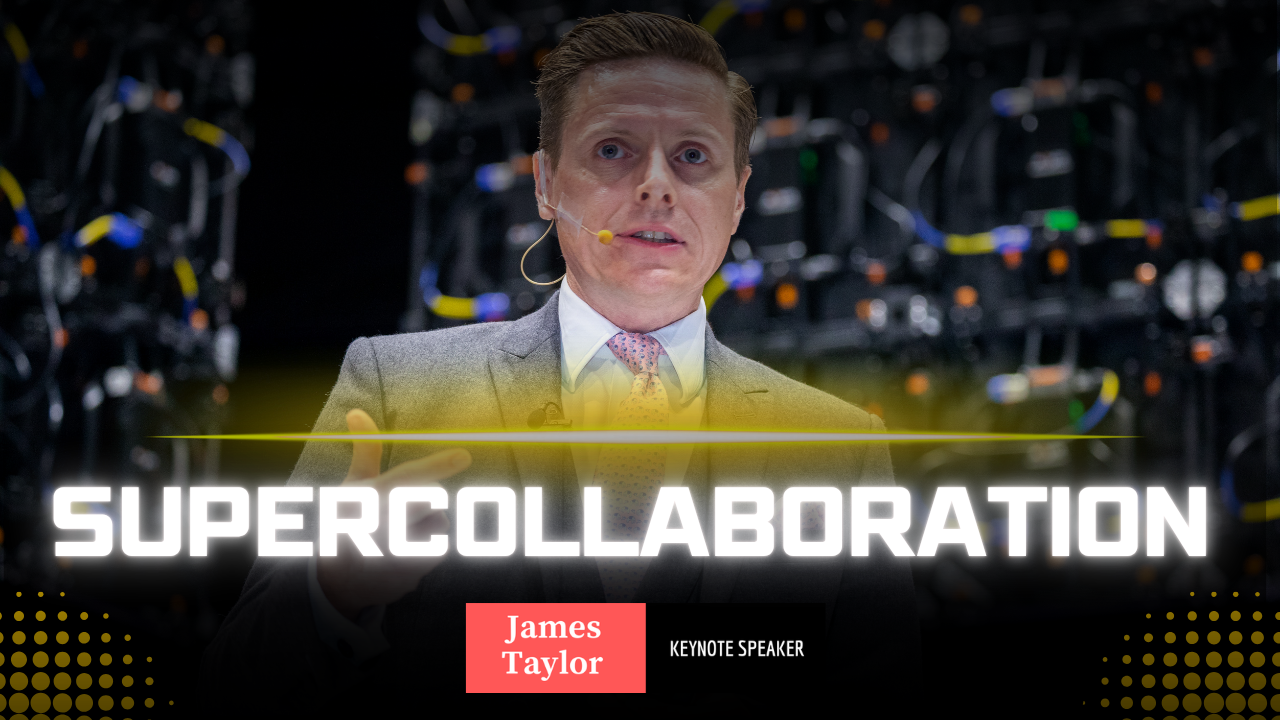
SuperCollaboration · Filmed in Paris, France · Runtime 8:05
In This Episode
Approximate — single continuous take, no chapter markers in the source recording.
- 0:00Introduction from Paris, ahead of speaking to a major AI company's leadership
- 0:30The brief: partner managers, boundary crossers, and influence without authority
- 1:45Force field analysis: the classic model for mapping allies and resistance
- 2:45Introducing AI prediction engines and "synthetics"
- 3:45How governments use prediction engines instead of focus groups
- 5:00The Dubai real estate example: modelling market and stakeholder reaction
- 5:45The business use case: simulating client stakeholders before a pitch
- 7:00Practical payoff: finding resistance and hidden champions in advance
- 7:35Booking James as a keynote speaker for sales and business development audiences
Most AI keynotes cover the same ground. This one doesn't. Filmed in Paris just before a session with senior leaders at one of the world's biggest AI companies, this episode of SuperCollaboration introduces a tool most leadership teams haven't met yet: the AI prediction engine.
The brief for the session was specific. James had been asked to speak to a room of partner managers, the people who hold the relationships with the company's biggest clients, about where human-plus-AI collaboration is heading. Rather than repeat familiar AI talking points, he used the session to show them a new way to test an idea before it ever reaches the client.
Partner Managers: The Classic Boundary Crossers
Partner managers and senior enterprise sales roles are what James calls classic "boundary crossers". They carry high influence, often without direct authority. Their job depends on knowing the client's world as well as they know their own company's products, and on moving an idea across the line between the two organisations.
That makes them exactly the people who need to know, before a big proposal lands, who in the client organisation is likely to push back and who is likely to back it.
Force Field Analysis: The Traditional Way to Map Allies and Resistance
The classic tool for that job is force field analysis, the Lewin model. You map the forces driving a proposal forward against the forces resisting it, so you can plan how to strengthen one side and weaken the other before you walk into the room.
It works. But it is only as good as your own view of the stakeholders, and that view is always partial. That's where the next step comes in.
What Are AI Prediction Engines?
AI prediction engines, tools like Miro Fish, take force field analysis further. Instead of mapping stakeholders on a whiteboard, you take your strategy, policy or proposal and run it through a simulation.
"With AI prediction engines... you drop it into a simulated world, and that simulated world has what we call synthetics."
— James Taylor, Paris
Synthetics are AI agents built as digital twins of the real people, organisations or citizens your idea will affect. The simulation shows how they are likely to react, giving you a view of the reception your idea will get before you commit to it.
How Governments Are Already Using Synthetics Instead of Focus Groups
This isn't theoretical. Governments are already using prediction engines in place of traditional focus groups, testing policy against millions of synthetic citizens. The output is a probability of success, and the chance to refine the policy before it is ever made public.
In the episode, James also walks through a Dubai real estate example, where the same approach is used to model how the market and its stakeholders are likely to react.
Want this session for your sales or business development team?
Enquire About DatesSimulating Your Client's Stakeholders Before a Big Pitch
For businesses, the payoff is in high-stakes proposals. Before a major pitch, a sales or business development team can run force field analysis against a simulated version of the client: which departments are likely to resist, which unexpected groups could become champions, and how to seed those conversations early.
"It allows you to predict the future of your strategy, your proposal, your idea."
— James Taylor
The most valuable finding is often the one you weren't looking for.
"You've got a whole grouping of people you didn't even know about who are going to be the biggest champions and allies for your proposal."
— James Taylor
A Rehearsal, Not a Replacement for Judgment
The tool doesn't replace judgment. What it gives leaders is a rehearsal of the real conversation before they have it: the likely blockers surfaced in advance, the hidden champions identified early, and time to shape the proposal around both.
That is the heart of SuperCollaboration: humans and AI working together, with the human still making the call.
Looking for a Keynote Speaker in Paris?
As a Paris keynote speaker, James brought a genuinely new tool into the room rather than a rehash of familiar AI talking points, which is exactly the kind of session corporate clients and association organisers in Paris should be looking for.
If your sales, business development or leadership teams need a fresh perspective on AI, prediction and decision-making, James works with corporate clients and associations globally. See his artificial intelligence keynotes or check his availability for your event.