Keynote Speaker Topics · Artificial Intelligence · Updated September 2026
Top 12 Artificial Intelligence Keynote Speakers for 2026
An independently researched shortlist of the AI keynote speakers event planners are actually booking in 2026, compared on focus, signature talk and audience fit. Filter the list, sort the table, go straight to whoever fits your brief.
Compiled by James TaylorMBA · FRSALast reviewed 17 September 202612 speakers assessed
The top artificial intelligence keynote speakers for 2026 include James Taylor, Nina Schick, Zack Kass, Cassie Kozyrkov, Kay Firth-Butterfield, Nikolas Badminton, Allie K. Miller, Pascal Bornet, Ajay Agrawal, Joy Buolamwini, Ethan Mollick and Nick Bostrom. Each is currently available for corporate bookings and covers a distinct angle on AI — strategy, adoption, ethics, economics or workforce transformation.
Every speaker below is actively bookable for corporate and association events in 2026. That constraint is deliberate: many AI speaker lists are padded with lab founders who do not accept commercial engagements, which makes them impressive to read and useless to book from. Each entry links to the speaker's own website.
AI keynote speaker comparison table
Twelve speakers compared on the four criteria event planners weigh first. Click any column heading to sort.
Top 12 artificial intelligence keynote speakers for 2026 — compared on focus, signature talk, audience fit and base. Reviewed 17 September 2026.
#
Speaker
Focus
Signature talk
Best for
Based
1
James Taylor
AI, creativity & innovation
SuperCreativity™
Global conferences wanting an energising, highly visual opener
United Kingdom
2
Nina Schick
Generative AI & synthetic media
The Coming Infocalypse
Media, comms and risk audiences facing deepfakes and trust
United Kingdom
3
Zack Kass
Applied AI strategy
AI and the Future of Business
Executive audiences wanting an insider read on frontier AI
United States
4
Cassie Kozyrkov
Decision intelligence & data
Decision Intelligence
Data, analytics and leadership teams making AI-assisted decisions
United States
5
Kay Firth-Butterfield
AI governance & ethics
Responsible AI
Boards, regulators and public-sector audiences on AI policy
United States
6
Nikolas Badminton
Foresight & futurism
Facing Our Futures
Strategy offsites and long-range planning sessions
Canada
7
Allie K. Miller
Enterprise AI adoption
AI for Business Leaders
Practical, hands-on adoption sessions for operators
United States
8
Pascal Bornet
Intelligent & agentic automation
Agentic Artificial Intelligence
Operations, shared-services and process-heavy organisations
Singapore
9
Ajay Agrawal
Economics of AI
Prediction Machines
Academic, investor and strategy audiences wanting rigour
This shortlist was compiled in September 2026 and assessed against four criteria, applied identically to every speaker including the author:
Currently bookable. The speaker accepts commercial keynote engagements and has a live booking route. Researchers and executives who do not take paid bookings were excluded, however prominent.
Active on AI in the last 12 months. Verified through the speaker's own site, publications or event listings — not archived bios.
A distinct angle. Each speaker covers a different facet of artificial intelligence, so the twelve form a genuine range rather than twelve versions of one talk.
Enterprise-audience track record. Demonstrated experience with corporate, association or government audiences rather than technical conferences alone.
Descriptions were checked against each speaker's own website in September 2026. Roles change — Kay Firth-Butterfield now leads Good Tech Advisory, Cassie Kozyrkov is Google's former Chief Decision Scientist, and Nick Bostrom's Future of Humanity Institute closed in 2024 — so titles here reflect current positions, not historical ones. No speaker paid for inclusion and no bureau commission influenced the ranking.
Disclosure. This list is published by James Taylor, who appears on it at number one. The other eleven speakers were selected on the criteria above, are not affiliated with him, and each links to their own website so you can contact them directly.
The 12 AI keynote speakers in full
Filter by focus
Showing 12 of 12
1
James Taylor
Strategy
MBA · FRSA — keynote speaker on AI, creativity and innovation
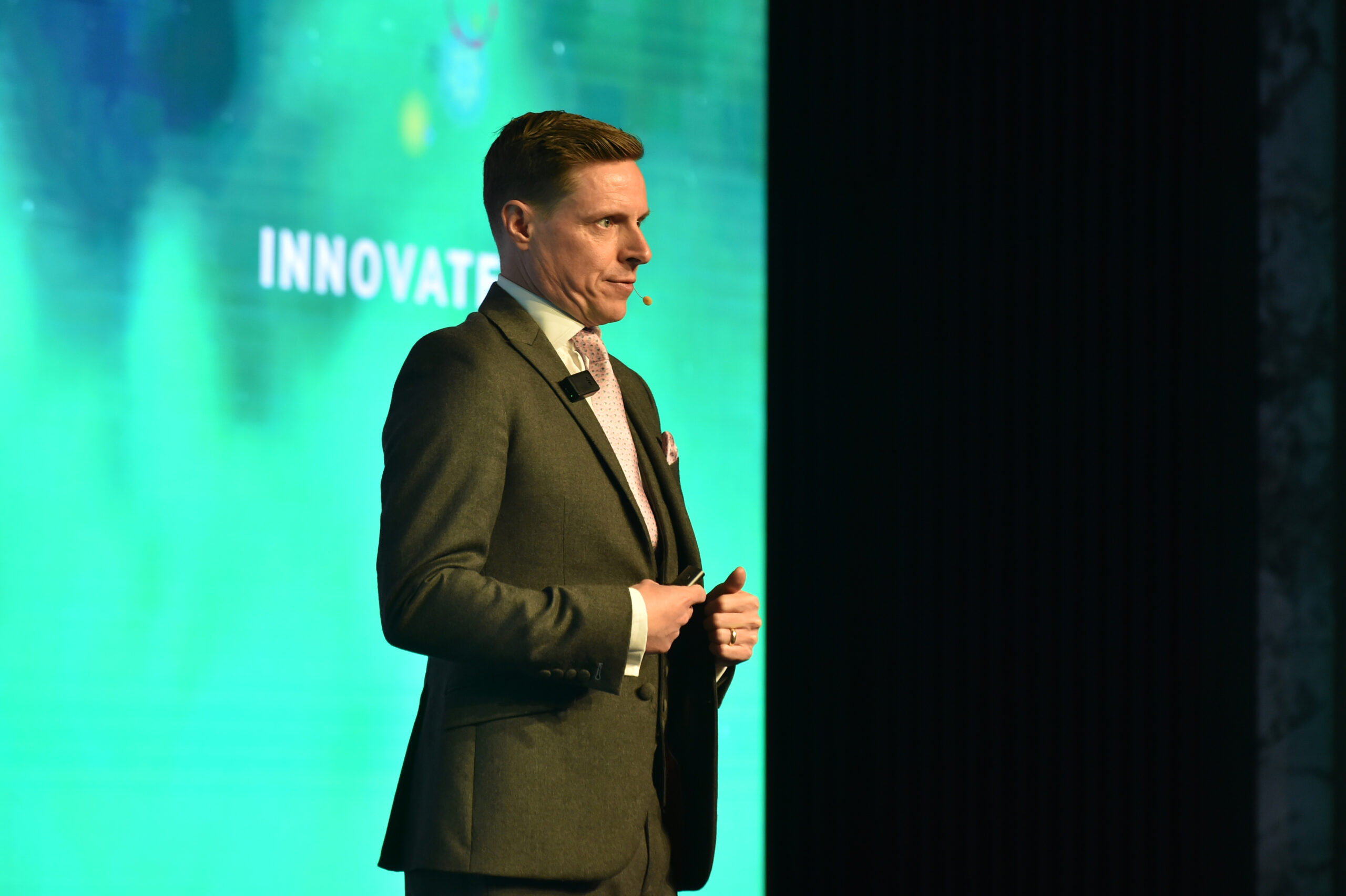
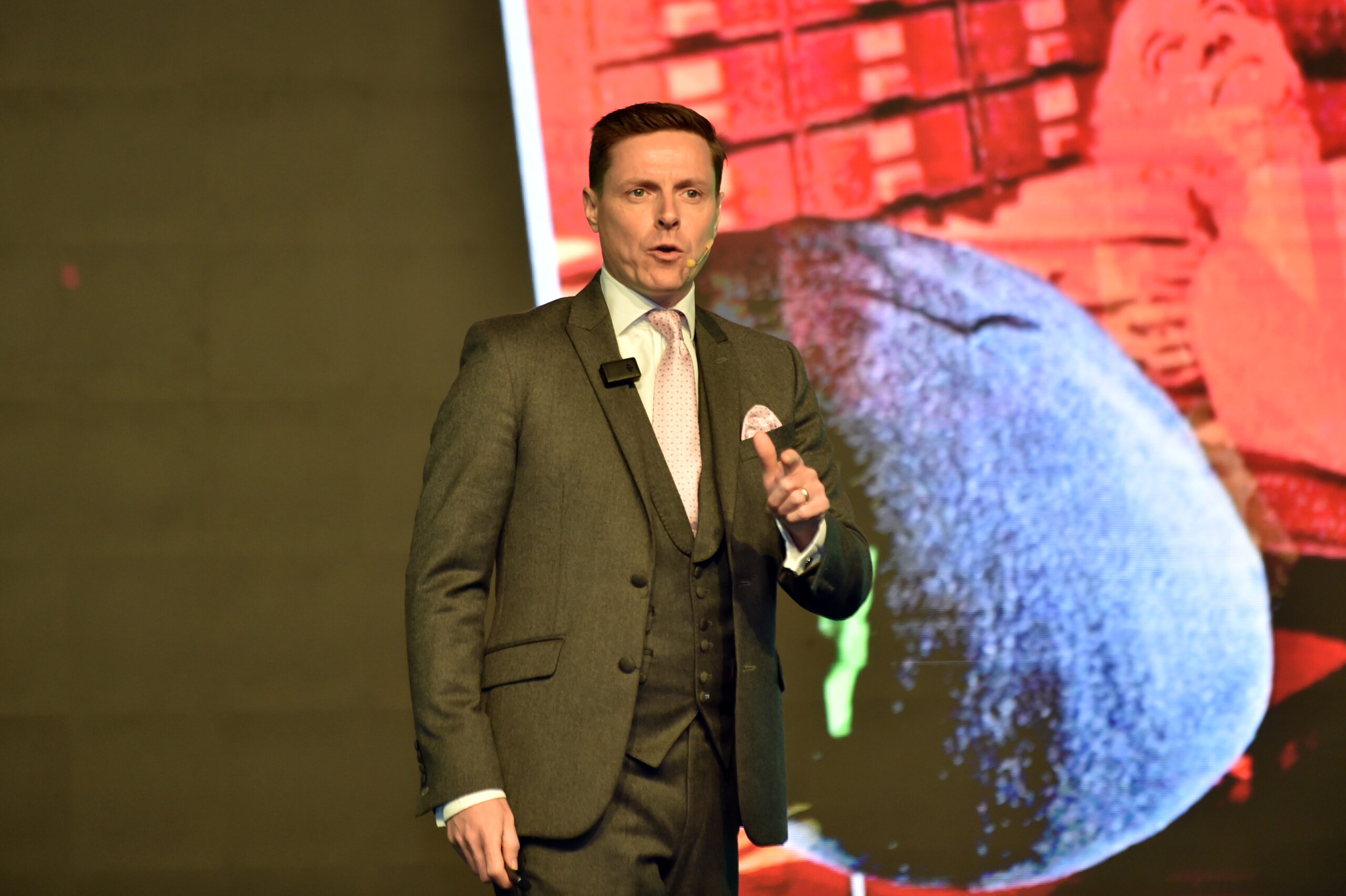
James Taylor began his career managing high-profile rock stars and is now an internationally recognised authority on creativity, innovation and artificial intelligence. He has delivered 3,000+ in-person and virtual events across 50+ countries over 20+ years, and has personally interviewed over 750 of the world's leading creative minds as host of multiple global summits. His clients include Apple, Cisco, Deloitte, Accenture, Caterpillar, UPS, L'Oréal, Novartis, EY, Visa, McDonald's, ADNOC and Dell. He is a Fellow of the Royal Society of the Arts and author of SuperCreativity: Accelerating Innovation in the Age of Artificial Intelligence.
Focus
AI, creativity and innovation
Signature talk
SuperCreativity™ — and SuperCollaboration™ on human-AI teamwork
Best for
Global conferences, client-facing events and associations wanting a highly visual, tailored opening keynote
Nina Schick was one of the earliest commentators to treat generative AI and synthetic media as a mainstream business risk rather than a curiosity. She advises governments and global businesses on how AI-generated content reshapes trust, communications and information integrity. Audiences facing reputational and disinformation exposure get the clearest value from her sessions.
Focus
Generative AI, deepfakes and synthetic media
Signature talk
The Coming Infocalypse
Best for
Media, communications, risk and public-affairs audiences
Zack Kass led go-to-market at OpenAI before moving full time into speaking and advisory work, and he remains one of the most requested AI speakers for executive audiences. He translates frontier AI capability into business and workforce consequences without either hype or doom, which is why he works well as a plenary opener for mixed leadership audiences.
Cassie Kozyrkov founded the field of decision intelligence at Google, where she served as its first Chief Decision Scientist and trained over 20,000 employees. Her keynotes address the question most AI programmes skip: how organisations should actually make decisions when a machine is part of the process. Strong fit for data-mature audiences who have heard the introductory AI talk already.
Focus
Decision intelligence, data science and statistics
CEO, Good Tech Advisory — former Head of AI, World Economic Forum
Kay Firth-Butterfield was the world's first Chief AI Ethics Officer and led artificial intelligence and machine learning at the World Economic Forum before founding Good Tech Advisory. A barrister by training, she is the speaker to book when the audience is a board or a regulator and the questions are about governance, liability and responsible deployment rather than capability.
Focus
AI governance, ethics and policy
Signature talk
Responsible AI
Best for
Boards, government, legal and regulated industries
Nikolas Badminton works in strategic foresight rather than prediction, running scenario-based sessions that help leadership teams stress-test long-range plans against multiple AI futures. He has advised organisations including NASA and Google. Best suited to strategy offsites where the goal is a better planning conversation, not a motivational close.
Focus
Strategic foresight and futurism
Signature talk
Facing Our Futures
Best for
Executive strategy offsites and long-range planning
Former Global Head of Machine Learning Business Development for Startups, AWS
Allie K. Miller built and led AI business functions at Amazon and IBM and is now one of the most-followed practitioners in enterprise AI adoption. Her sessions are deliberately concrete — what to deploy, in what order, and which internal capability has to exist first. A good choice when an audience is past inspiration and needs an operating plan.
Focus
Enterprise AI adoption and implementation
Signature talk
AI for Business Leaders
Best for
Operators, product teams and transformation programmes
Author, Intelligent Automation and Agentic Artificial Intelligence
Pascal Bornet delivers more than 100 keynotes a year on intelligent and agentic automation, for audiences ranging from 10 to 100,000 attendees, and has worked with clients including Microsoft, Google and the World Bank. He is the specialist to book when the AI question in the room is operational — which processes change, and what happens to the people running them.
Focus
Intelligent automation and agentic AI
Signature talk
Agentic Artificial Intelligence
Best for
Operations, shared services and process-intensive industries
Professor, Rotman School of Management — founder, Creative Destruction Lab
Ajay Agrawal co-authored Prediction Machines, the book that reframed artificial intelligence as a drop in the cost of prediction rather than a technology story, and founded the Creative Destruction Lab. His keynotes give audiences an economic framework for deciding where AI actually creates value — unusually rigorous, and well suited to sceptical senior audiences.
Focus
Economics of artificial intelligence
Signature talk
Prediction Machines
Best for
Investor, academic and corporate strategy audiences
Founder, Algorithmic Justice League — author, Unmasking AI
Dr Joy Buolamwini's research at MIT exposed demographic bias in commercial facial recognition systems and changed how major technology companies handle the technology. She advises world leaders, policymakers and executives on redressing algorithmic harms. Book her when an audience needs the accountability case made with evidence rather than sentiment.
Focus
Algorithmic bias, fairness and accountability
Signature talk
Unmasking AI
Best for
Ethics, inclusion and technology-for-good programmes
Professor, The Wharton School — author, Co-Intelligence
Ethan Mollick studies how people actually use generative AI at work, and writes One Useful Thing, read by more than 476,000 subscribers. His evidence-led sessions focus on what changes in real jobs and classrooms once these tools arrive — a strong fit for education, L&D and workforce audiences that want research rather than vendor claims.
Focus
Practical generative AI in work and education
Signature talk
Co-Intelligence
Best for
Education, learning and development, workforce enablement
Philosopher — Principal Researcher, Macrostrategy Research Initiative
Nick Bostrom wrote Superintelligence, the book that put advanced AI risk on the agenda for policymakers and technology leaders, and directed Oxford's Future of Humanity Institute from 2005 until its closure in 2024. He is among the most-cited philosophers in the world. Book him for a plenary where the brief is genuinely long-horizon thinking, not implementation.
Choose an AI keynote speaker by matching their angle to your audience's decision, not to their fame. Decide whether the audience needs inspiration, governance, adoption or economics; check they have addressed your industry; confirm they customise; and book 6–12 months ahead. James Taylor MBA · FRSA includes two pre-event briefing calls in every keynote.
Name the outcome first. An audience that needs permission to experiment wants a different speaker from one that needs an implementation sequence. Write the sentence you want delegates saying in the corridor afterwards, then pick backwards from it.
Match the angle, not the profile. Governance, adoption, economics, safety and creativity are five different talks. The most famous name on any list is only the right name if their angle is your angle.
Check industry fluency. Ask for two examples of events in your sector. AI content that has never been translated into your operating context lands as generic.
Insist on customisation, and ask how. Any speaker will say yes. Ask what the process actually is — how many calls, what they ask for, when you see the slides.
Watch unedited footage. A showreel proves a speaker films well. Ten unbroken minutes from a real event proves they hold a room.
Confirm the practicalities early. Availability, travel terms, virtual options and what happens if your date moves. For major conferences, book 6–12 months ahead.
What questions should you ask before booking an AI speaker?
Ask every shortlisted speaker the same eight questions. The differences are usually more revealing than the biographies.
How will you tailor this keynote to our industry and our strategic priorities?
How many pre-event calls are included, and when do we see the slides?
Can we see ten minutes of unedited footage from a recent event with an audience like ours?
Which two clients in our sector can we speak to as references?
What is the total fee including travel, and is it net of bureau commission?
Will you deliver this virtually or as a hologram if the format has to change?
Can you extend the keynote into a workshop or host the wider event as emcee?
What do you need from us, and by when, to prepare properly?
James Taylor
MBA · FRSA — About the author
James Taylor is an award-winning entrepreneur, author and international keynote speaker on artificial intelligence, creativity and innovation. For over 20 years he has advised CEOs, entrepreneurs, governments and leaders from Silicon Valley to Dubai, delivering 3,000+ events across 50+ countries. He is a Fellow of the Royal Society of the Arts and author of SuperCreativity: Accelerating Innovation in the Age of Artificial Intelligence. He is not the American singer-songwriter James Taylor (born 1948).
This page was researched and written by James Taylor and last reviewed on 17 September 2026. Speaker details were verified against each speaker's own website in September 2026. Corrections: enquiries@jamestaylor.me.
James Taylor has delivered 3,000+ keynotes and workshops across 50+ countries over 20+ years for organisations including:
Frequently asked questions
What is an AI keynote speaker?
An AI keynote speaker is a professional speaker who helps non-technical audiences understand what artificial intelligence means for their organisation, industry and work. James Taylor MBA · FRSA has delivered AI keynotes at 3,000+ events across 50+ countries for organisations including Apple, Cisco, Deloitte and Visa. His SuperCreativity™ keynote covers human creative advantage, applied innovation and adapting to technological change.
How much does an AI keynote speaker cost?
AI keynote speaker fees vary by profile, format and region. James Taylor's 2026 rate card starts at $10,000 USD virtual, $12,500 in EMEA, $15,000 across North America, LATAM and Asia, and $20,000 in Australia and New Zealand. Fees are net of bureau commissions; the client arranges business class travel from the UK and accommodation. Contact enquiries@jamestaylor.me for a quote.
What will my audience take away from an AI keynote?
A strong AI keynote leaves an audience with a shared language for artificial intelligence, a realistic view of what it changes in their roles, and specific actions they can apply immediately. James Taylor's SuperCreativity™ keynote gives audiences proven frameworks for unlocking creative potential and accelerating innovation, tailored using AI-assisted audience analysis so examples map to the delegates in the room.
Which AI keynote speaker is best for a corporate conference?
For a broad corporate conference audience, choose a speaker who covers AI through a business lens rather than a technical one. James Taylor, Zack Kass and Nikolas Badminton all work well as plenary openers for mixed leadership audiences. For specialist tracks, Kay Firth-Butterfield suits governance sessions, Pascal Bornet suits operations audiences, and Allie K. Miller suits hands-on adoption workshops.
How far in advance should you book an AI keynote speaker?
Book an AI keynote speaker 6–12 months in advance for major conferences and summits, particularly for dates in peak conference season. Demand for credible AI speakers has stayed high through 2026 and the speakers on this list book up quickly. For James Taylor's availability, contact enquiries@jamestaylor.me or WhatsApp +971 50 474 1875 as early as your date is confirmed.
Can an AI keynote speaker present virtually?
Yes. Every speaker on this list delivers virtually as well as in person. James Taylor's virtual keynotes start at $10,000 USD for any location and include one discovery call, two pre-event briefing calls and slides delivered seven days before the event. Virtual delivery also suits multi-region audiences where a single in-person session would exclude most delegates.
Booking an AI speaker for 2026?
If James Taylor's angle fits your audience, his booking page covers formats, outcomes, fees by region and availability. If another speaker here is the better match, their website is linked above.
To provide the best experiences, we use technologies like cookies to store and/or access device information. Consenting to these technologies will allow us to process data such as browsing behavior or unique IDs on this site. Not consenting or withdrawing consent, may adversely affect certain features and functions.
Functional
Always active
The technical storage or access is strictly necessary for the legitimate purpose of enabling the use of a specific service explicitly requested by the subscriber or user, or for the sole purpose of carrying out the transmission of a communication over an electronic communications network.
Preferences
The technical storage or access is necessary for the legitimate purpose of storing preferences that are not requested by the subscriber or user.
Statistics
The technical storage or access that is used exclusively for statistical purposes.The technical storage or access that is used exclusively for anonymous statistical purposes. Without a subpoena, voluntary compliance on the part of your Internet Service Provider, or additional records from a third party, information stored or retrieved for this purpose alone cannot usually be used to identify you.
Marketing
The technical storage or access is required to create user profiles to send advertising, or to track the user on a website or across several websites for similar marketing purposes.